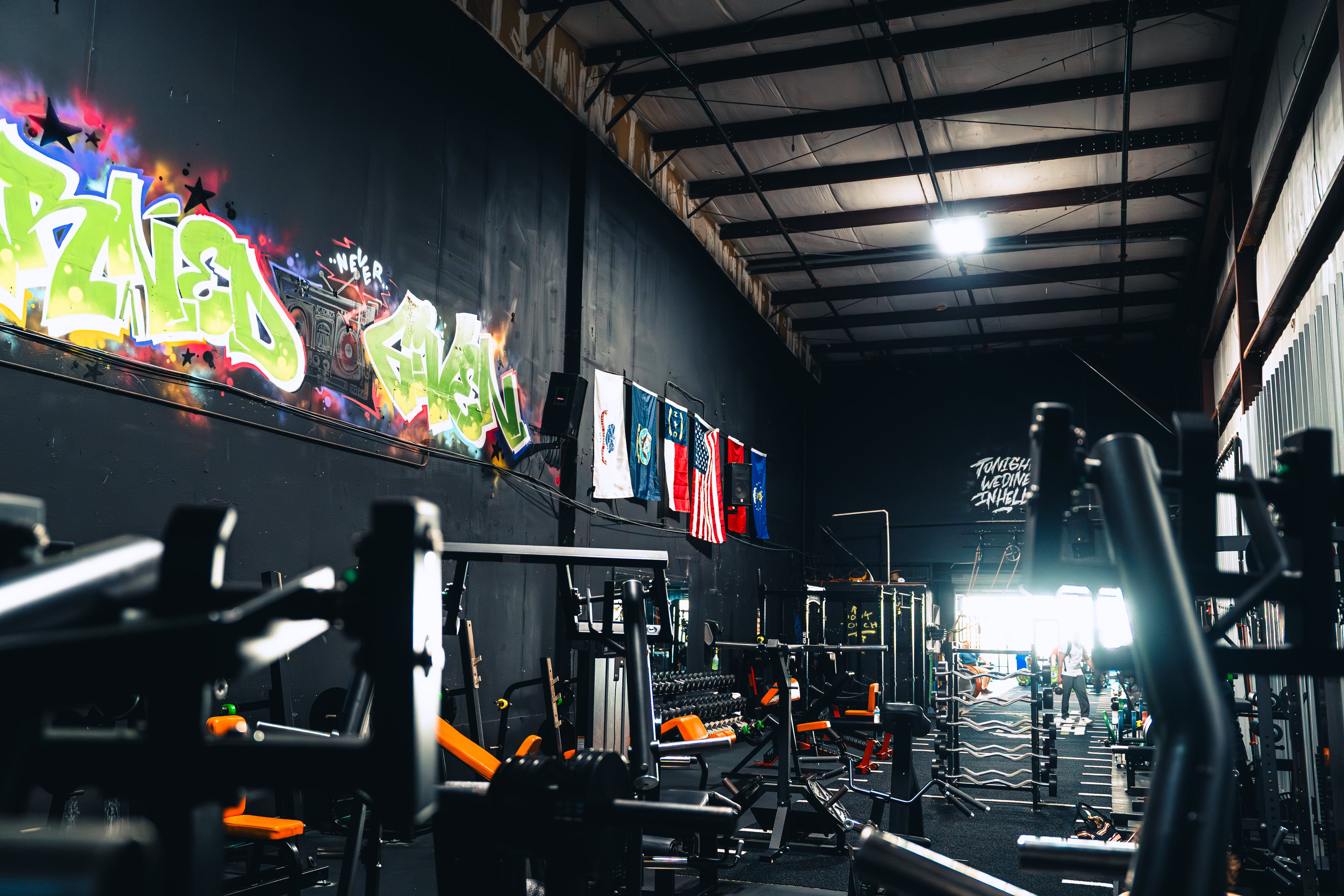
Everything you need to know before joining a gym in Raleigh — what to look for, which type of gym fits your goals, where to train by neighborhood, and why serious lifters across the Triangle choose Archetype Strength.
Raleigh, NC is one of the fastest-growing cities in the Southeast, and the gym market reflects it. Between the university population around NC State, a booming tech and research corridor in RTP, and an expanding residential base stretching from North Raleigh into Wake County, there are more gyms in Raleigh than ever before. Large commercial chains, privately owned strength gyms, boutique fitness studios, 24-hour access facilities, personal training studios — the options span a wide range of price, quality, and purpose.
That variety is a good thing, but it makes choosing harder. A commercial gym with hundreds of cardio machines and a smoothie bar might look impressive on a tour but leave you waiting 20 minutes for a squat rack at 6 PM. A boutique studio might have great instructors but lock you into a schedule that doesn't fit your life. And some "24-hour gyms" in Raleigh are genuinely open around the clock — while others quietly restrict overnight access in practice.
This guide cuts through the noise. We'll break down what to actually look for when evaluating a gym in Raleigh, walk through the different types of gyms available, highlight the best areas to train across the city, and explain why lifters who are serious about strength training consistently land at Archetype Strength.
Not all gyms are built the same — and Raleigh gyms vary dramatically on the factors that actually matter to your training. Here is what to evaluate before you sign up.
This is the single most important factor for anyone who wants to get stronger. A gym can look great from the outside, but if it has two squat racks, no deadlift platforms, and dumbbells that top out at 80 lbs, it is going to limit your progress quickly. Look for: multiple squat racks (not Smith machines masquerading as racks), proper free-weight platforms, a full dumbbell range, a variety of barbells, and enough plate inventory that you're not fighting over 45s. For strength athletes, specialty bars — SSB, cambered, trap bar — matter too.
Ask the gym specifically: how many squat racks, what is the dumbbell max weight, and do they have platforms? Those three questions will tell you more than any tour pitch.
In Raleigh, most lifters don't train during business hours. Early mornings before work, late evenings, weekend afternoons, and overnight sessions for shift workers are all common needs. A gym that closes at 10 PM forces you to fit your training into everyone else's schedule — not yours. Genuine 24/7 access, where your key fob or app unlocks the door at 2 AM, is different from a gym that technically says "24 hours" but restricts access during certain periods or requires a staff member present.
Confirm: is it truly unstaffed 24/7? What technology controls the door? Is there a backup plan if the app fails? What is the security setup during overnight hours?
The big-box gym business model depends on selling far more memberships than can actually fit in the building at once — and hoping most people don't show up. This works out fine for occasional gym-goers, but if you train consistently during peak hours (5–7 PM weekdays, Saturday mornings), you'll feel the impact. Waiting for a rack is demoralizing, disrupts programming, and wastes the most valuable part of your day.
When visiting, ask: what does peak-hour traffic look like? How many members does the gym have per square foot of training area? Private and membership-capped gyms are often the honest answer here.
There is a significant difference between a gym with a sales team and front desk staff versus one where the coaches are certified strength and conditioning specialists, competitive lifters, or both. If you are new to barbell training or want access to expert guidance on form, programming, or injury prevention, the quality of coaching available matters enormously.
Check credentials, ask about the coaching staff's backgrounds, and find out whether personal training is done by in-house coaches or contracted out to independent trainers with variable quality.
The gym you pick becomes part of your routine and, whether you notice it or not, part of your identity as a lifter. Some Raleigh gyms have strong communities of competitive powerlifters who push each other. Others are primarily social spaces where the workout is secondary. Some are welcoming to beginners; others have an implicit standard that can be intimidating. Visiting in person during your typical training time is the best way to assess culture. Pay attention to who is there, what they are doing, and how they interact with each other and with staff.
A dirty gym is a sign of deeper management issues. Fraying upholstery, rusty barbells, missing collars, and equipment that has been out of service for weeks all signal that maintenance is not a priority. In a gym you plan to visit four or five times a week, cleanliness directly affects your experience and health. Look closely during your tour — not at the showroom floor, but at the free-weight area and locker room.
The gym membership contract is one of the most consumer-unfriendly products in retail. Annual fees charged months after signup, 12-month commitments with near-impossible cancellation clauses, and billing that continues long after you have stopped attending are all common complaints about large commercial gym chains in Raleigh. Before signing anything, get clear answers on: (1) is there a minimum commitment period, (2) are there any fees beyond the stated monthly rate, (3) exactly how do you cancel and how much notice is required, and (4) what happens if you need to freeze your membership due to injury or travel?
The cleanest arrangement — month-to-month, cancel anytime, no hidden fees — gives you the flexibility your life actually requires and signals that the gym earns your business with quality rather than contractual lock-in.
The Raleigh gym market spans four main categories. Understanding the differences helps you match a gym to your actual goals, schedule, and budget.
The large national and regional franchises — think Planet Fitness, LA Fitness, Crunch, Gold's Gym, and similar chains. These facilities are designed for mass-market appeal: extensive cardio equipment, wide hours (though rarely true 24/7), large footprints, and budget pricing to attract high membership volume. The trade-off is a crowded floor during peak hours, a layout optimized for cardio and machines over serious barbell work, and limited coaching expertise on staff. For general fitness and cardio, they work fine. For strength athletes, the equipment selection is often a limiting factor.
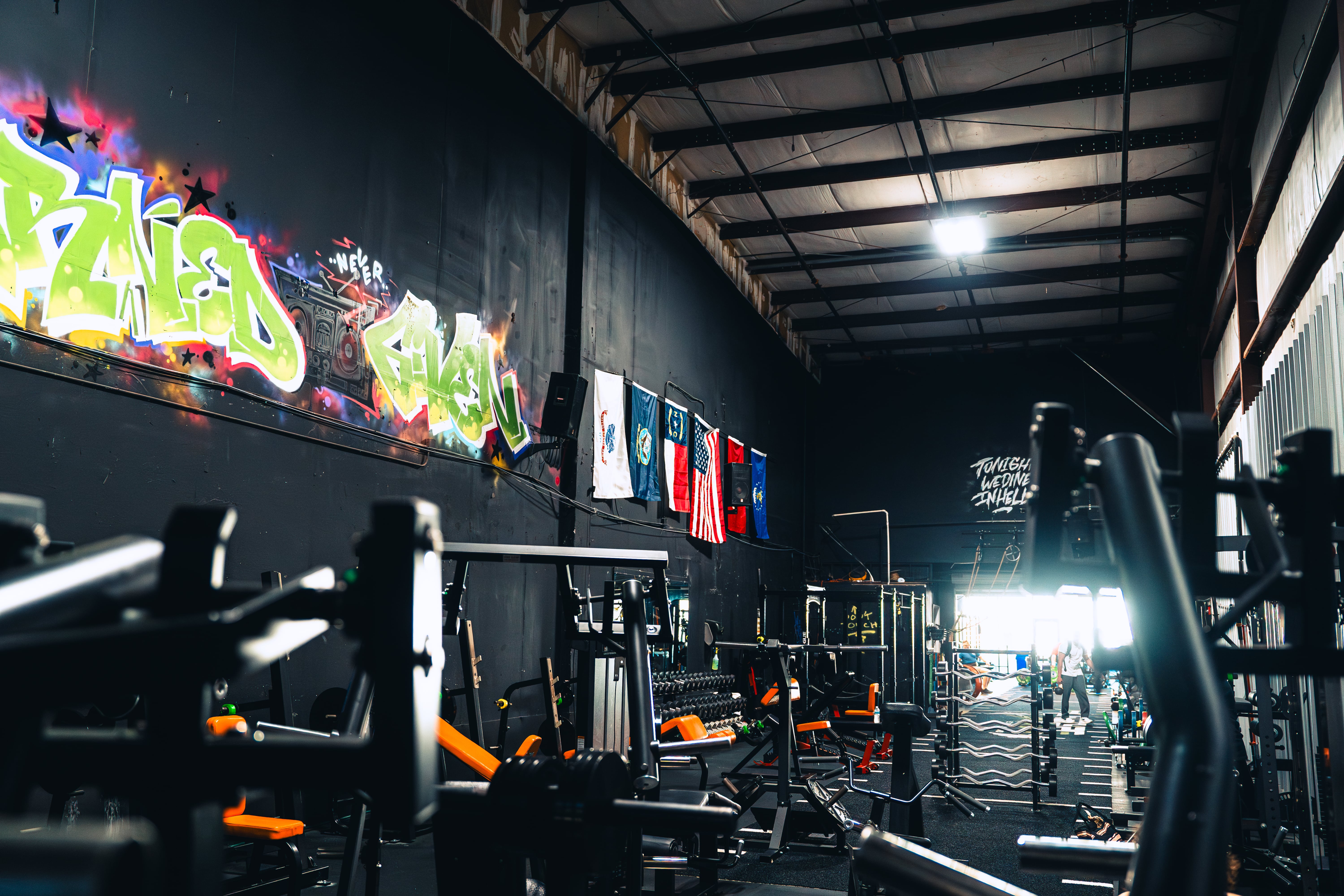
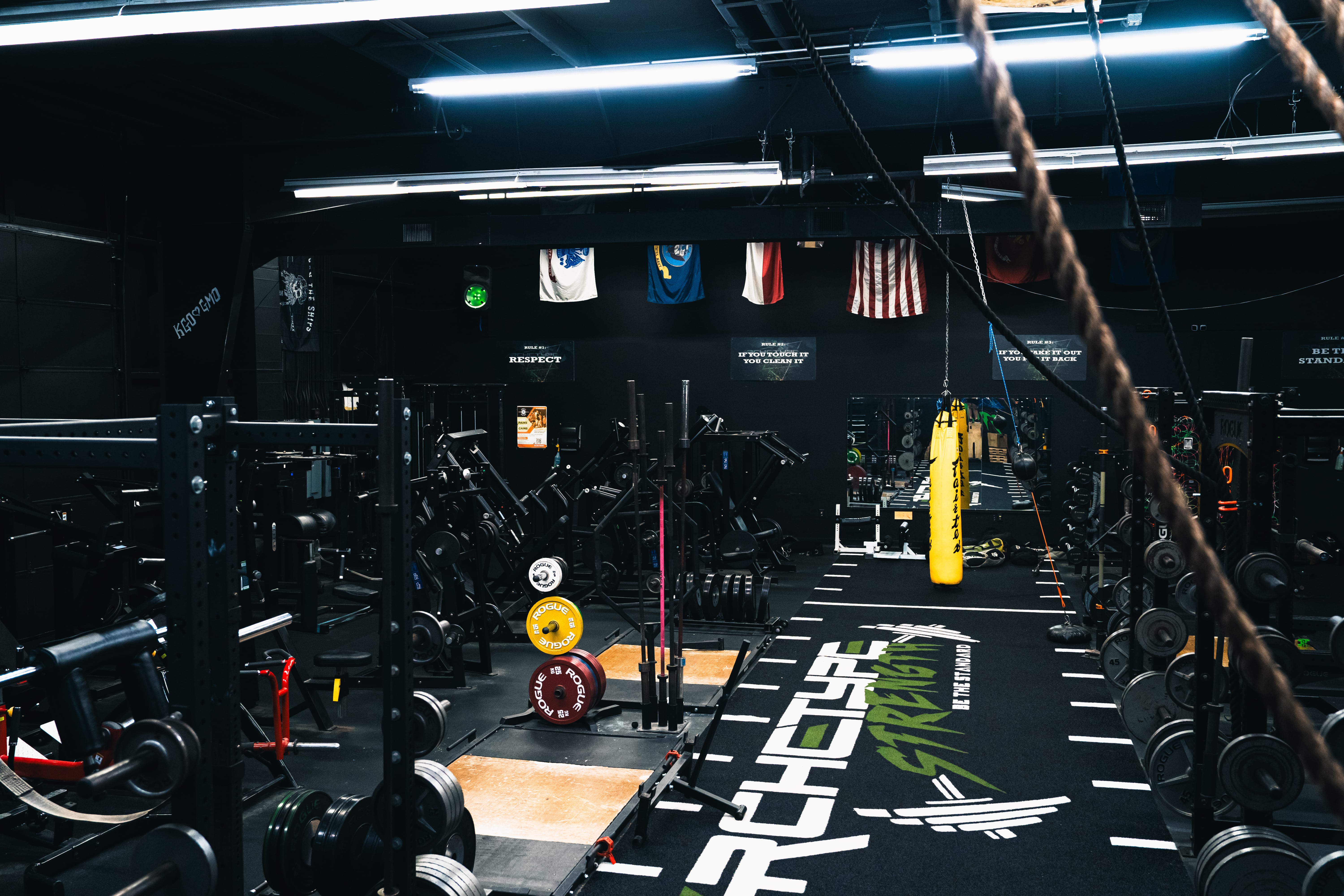
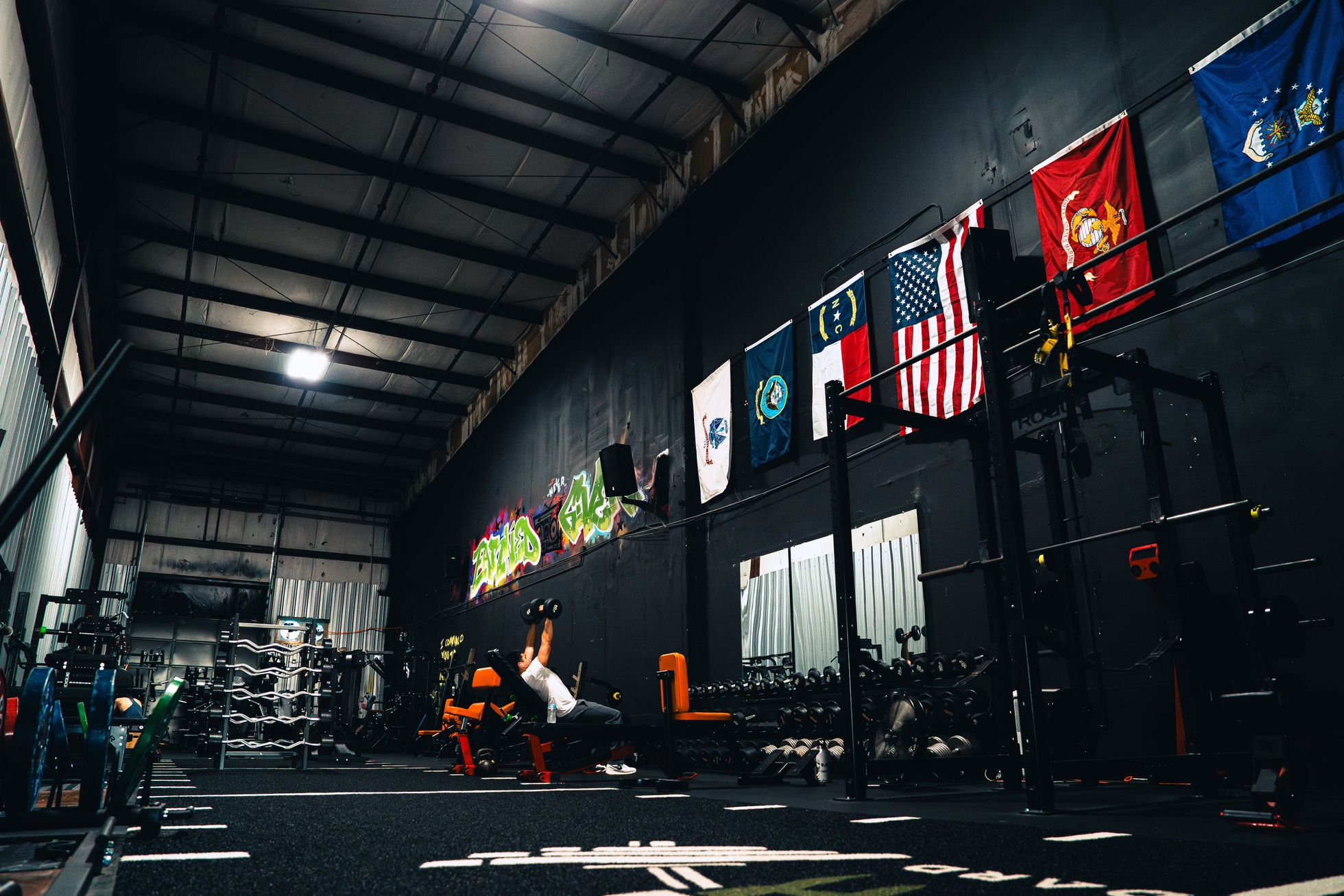
Smaller, privately owned facilities built specifically for strength training — powerlifting, bodybuilding, and general barbell work. These gyms prioritize equipment quality and density over amenities, cap membership to control foot traffic, and are typically founded by coaches and lifters who train themselves. The environment is more focused and community-driven, with significantly better equipment-to-member ratios than commercial gyms. This is the category that includes Archetype Strength — three locations across Raleigh built by strength coaches for people who take training seriously.
Studios built around a specific class format — CrossFit boxes, yoga studios, cycling studios (Spin, Peloton-style), barre, HIIT circuits, and similar models. The scheduled class structure provides accountability and variety, and the instructor-led format is helpful for beginners who want guidance without one-on-one pricing. The downside is schedule dependency: you train when a class is offered, not necessarily when you want to. Drop-in pricing at boutique studios can also be steep ($25–$40 per class), and monthly memberships run $100–$200+ in Raleigh for unlimited classes at many studios.
A subset of both commercial and private gyms, the defining feature of this category is true around-the-clock access controlled by key fob or app — no staffing required. For shift workers, early risers, night owls, or anyone whose schedule is unpredictable, genuine 24/7 access changes the game. Not all gyms in Raleigh that advertise "24 hours" deliver on it equally. The best 24-hour gyms combine unrestricted access with high-quality equipment — so you are not just getting in the door at 3 AM, but actually getting a great workout. Archetype Strength's 24-hour gym locations in Raleigh operate on this model across all three locations.
Raleigh is not historically known as a powerlifting or strength hub the way some cities are, but that is changing fast. The Research Triangle draws a highly educated, performance-minded population that values doing things seriously — including training. Over the last decade, the number of private strength gyms in the Raleigh-Durham area has grown substantially, with locally owned facilities replacing the assumption that the only option is a big-box chain.
Serious barbell training — whether powerlifting, Olympic lifting, strongman, or simply building a foundation of strength through compound movements — requires specific equipment that most commercial gyms cannot deliver in adequate quantity. You need squat racks, not Smith machines. You need deadlift platforms, not rubber mats you drag out from a corner. You need enough barbells that you are not sharing one between three people. And ideally, you need coaches who understand programming, periodization, and how to keep lifters healthy over years of training, not just personal trainers who follow a certification script.
Archetype Strength was founded by strength and conditioning coaches who wanted to build the gym they actually wanted to train at. That origin shapes everything — from the equipment selection to the coaching culture to the emphasis on keeping foot traffic low enough that you can always walk up to a rack and train.
The quality and cost of personal training in Raleigh vary as much as the gyms themselves. At commercial chains, personal trainers are often hourly employees hired primarily based on their ability to sell training packages, with coaching quality varying widely. Independent personal trainers typically operate at higher quality — but finding one with the right background for your goals requires research.
What to look for in a personal trainer in Raleigh: CSCS (Certified Strength and Conditioning Specialist) or NSCA-CPT credentials, experience with your specific training goals (powerlifting prep, hypertrophy, general strength, athletic performance), and a clear approach to programming rather than just showing up and improvising workouts. Ask about their system for tracking progress, how they handle injury or de-load weeks, and what a typical 4-week training block looks like.
Archetype Strength offers personal training with certified coaches starting at $250/month at all three Raleigh-area locations. If you are new to barbell training, working with one of our coaches is the fastest way to build a safe foundation — and existing open gym members can add coaching without leaving the environment they already know.
Gym community is easy to dismiss as a soft factor — but the research on training adherence is clear: social support and belonging are among the strongest predictors of long-term consistency. A gym where you know people, where staff recognize you, and where the other members are invested in their own training (and occasionally yours) is a fundamentally different environment than an anonymous box full of strangers.
At Archetype Strength, the community has developed organically around a shared commitment to serious training. You will find competitive powerlifters, first-time barbell lifters being coached through their first squat, bodybuilders, athletes, and everyday people who have decided that strength training is a non-negotiable part of their week. What they share is the attitude: they are here to work, and they respect that you are too.
If you have been training alone in a commercial gym and wondering why your motivation ebbs and flows — being around people who take training as seriously as you do has a compounding effect that is hard to overstate.
Raleigh is a sprawling city — commuting across town to a gym quickly becomes unsustainable. Here is where Archetype Strength fits into each major area.
The West Raleigh corridor — Hillsborough Street, Cameron Village, Avent Ferry, and the neighborhoods around NC State — is one of the densest training populations in Raleigh. Between the university community, young professionals, and established neighborhoods along the western beltline, demand for a quality strength gym here is high. The commercial options are fine for casual fitness, but for anyone serious about barbell training, the choices have historically been thin.
Archetype Strength West Raleigh at 6601 Hillsborough St sits in the heart of this corridor. It is minutes from NC State's campus, convenient to Carter-Finley and the Cary/Morrisville border, and draws members from across the western half of Raleigh. 24/7 app access means NC State students can train at odd hours around class schedules, and shift workers and early risers in the area have a real option that does not close at 10 PM.
East Raleigh and North Raleigh capture a wide geographic swath — from the neighborhoods immediately east of downtown up through the growing residential areas along Capital Blvd and beyond. This part of the city has seen significant growth and development, with a workforce that increasingly expects gym options that match the caliber of where they live and work.
Archetype Strength East Raleigh at 2011 N Raleigh Blvd is accessible from downtown Raleigh in five to seven minutes and serves the east side, North Raleigh, and the communities along the 401 corridor. With 8 squat racks, 4 deadlift platforms, 105 feet of open turf, dumbbells to 150 lbs, and full 24/7 access, it is the most comprehensively equipped strength gym in eastern Raleigh. It is also the starting point for many Archetype members who come from the direction of Knightdale, Garner, or downtown.
The Research Triangle Park corridor — spanning Morrisville, Brier Creek, and the western Durham border — is one of the highest-density employment zones in North Carolina. Tens of thousands of tech workers, healthcare professionals, and researchers work in this area, and a substantial portion of them want a gym that fits their demanding schedules. Morning sessions before heading into the office, lunchtime workouts, or late-evening training after a long day are all common patterns here.
Archetype Strength RTP/Brier Creek at 9521 Lumley Rd, Morrisville serves this entire corridor. It is also the go-to strength gym for Morrisville residents who want a private gym without driving into Raleigh. Same equipment standard, same 24/7 app access, same no-contract membership as the other two locations — all included under one membership.
After evaluating what to look for in a gym, understanding the types of gyms available, and thinking about your specific location in the Triangle — the answer for serious lifters tends to be the same: Archetype Strength.
Three locations cover the major corridors: West Raleigh for the NC State and western Raleigh population, East Raleigh for downtown and east-side lifters, and RTP/Brier Creek for the Morrisville and Research Triangle workforce. One membership covers all three — so if your commute changes, you travel to a different part of the city, or you simply want to train at a different location one day, you are covered without any additional fees.
The gym is private and intentionally low-foot-traffic. The membership is not sold at volume designed to maximize headcount — it is sized to keep the floor usable and equipment available. There are no crowds at 6 PM. There is no waiting for a rack. There are no strangers filming in the mirror. It is a working gym for people who come to train.
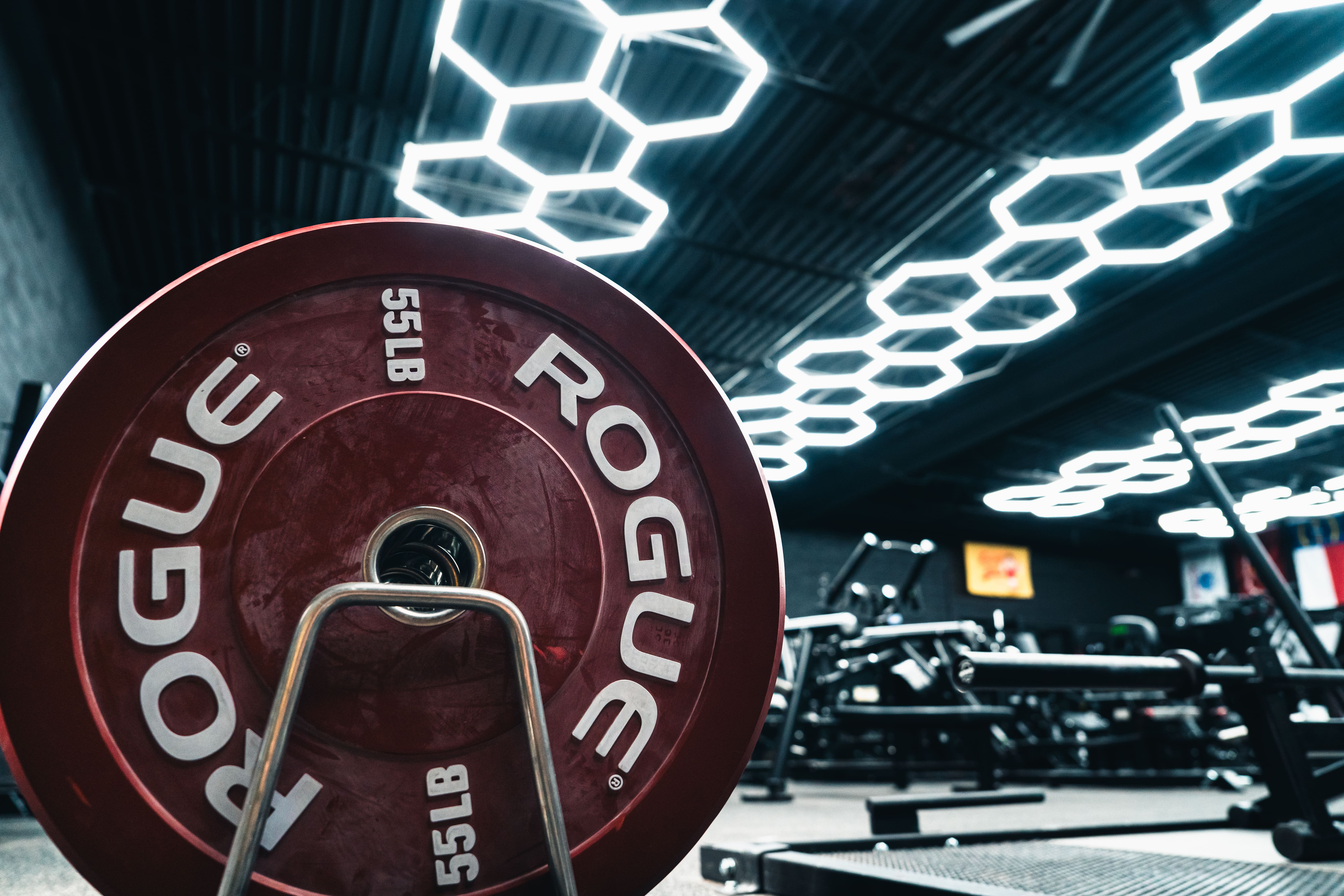
The equipment is built for powerlifting, bodybuilding, and strength training: squat racks, deadlift platforms, specialty bars, bumper plates, heavy dumbbells, turf areas, and sleds. Every piece of equipment is maintained and functional. Nothing is chained off. Nothing requires waiting for the trainer on duty to unlock it.
Coaching is available if you want it — CSCS-certified strength coaches who have built training programs for competitive athletes and everyday lifters alike. But open gym membership is fully self-directed if you prefer to train on your own program. There is no pressure to buy coaching, no trainer following you around during your first week.
And the membership is clean: $69/month, month-to-month, no contracts, no annual fees, no cancellation runaround. You're billed monthly, you can cancel anytime, and that's it. Visit our pricing page or contact us for current rates and options.
Gym costs in Raleigh span a wide range. Large national chains typically charge $10–$40 per month for a base membership, though this often excludes peak-hour access, certain equipment, or the location you actually want — and most add annual "enhancement" fees of $30–$50. Mid-tier commercial gyms run $40–$65 per month. Boutique fitness studios (CrossFit, cycling, HIIT) often price memberships at $100–$200 per month for unlimited classes. Private strength gyms like Archetype Strength charge $69 per month with no contracts and no annual fees — all three locations included.
For dedicated strength training — powerlifting, barbell work, bodybuilding, or simply getting strong — Archetype Strength is the top-rated strength gym in Raleigh. Three locations, each equipped with multiple squat racks, deadlift platforms, specialty bars, and heavy dumbbells. Coaching-first staff, low foot traffic, and 24/7 app access. For lifters coming from a commercial gym background, the difference in training quality is immediate.
Yes — and the distinction between genuinely 24/7 and technically 24/7 matters. Archetype Strength operates three 24-hour gyms in the Raleigh area: West Raleigh (6601 Hillsborough St), East Raleigh (2011 N Raleigh Blvd), and RTP/Brier Creek in Morrisville (9521 Lumley Rd). Access is controlled by the KISI app on your phone — no fob required, and the doors are genuinely open at any hour without restriction. Some commercial chains advertise 24-hour access but limit it to certain membership tiers or require a separate key fob add-on.
Many large commercial chains in Raleigh do require contracts — 12-month agreements are standard, with annual fees on top of monthly dues and complicated cancellation procedures. Some gyms offer month-to-month at a premium. Archetype Strength has no contracts and no annual fees. Membership is month-to-month at $69, and you can cancel anytime. See the pricing page for current details.
Archetype Strength West Raleigh is located at 6601 Hillsborough St, directly on the primary corridor serving NC State's campus and the surrounding neighborhoods. It is the closest private strength gym to NC State and one of the most popular options for students, grad students, and faculty who want 24/7 access, serious barbell equipment, and a training environment that is not a crowded campus rec center. Student discounts and short-term membership options are available — contact us for details.
Archetype Strength's RTP/Brier Creek location at 9521 Lumley Rd, Morrisville serves the Research Triangle Park corridor, Brier Creek, and Morrisville residents. For gyms in Morrisville, NC specifically, this is the only private strength gym with 24/7 access and full barbell equipment in the area. RTP employees, Brier Creek residents, and lifters in the western Research Triangle have full access to all three Archetype locations on a single membership.
The key factors: number of squat racks and deadlift platforms (critical for strength training), actual hours of access and whether it is truly 24/7, membership volume relative to equipment availability, coaching credentials on staff, contract and cancellation terms, and cleanliness. Visit your top two or three options in person during the hours you would actually train — not just on a guided tour during a slow mid-morning. Ask direct questions about rack count, average peak-hour wait times, and exactly how cancellation works. You can also schedule a free tour at Archetype Strength to see the facility for yourself before committing.